
Rohith Shinoj Kumar
AI Researcher • Computer Science Graduate (NITK)
I am a researcher focused on Trustworthy AI and Medical Imaging, aiming to pursue a PhD in deployable and reliable AI medical systems. Working under Dr. Jeny Rajan (VIP Lab) and Prof. Annappa B (DISCOVER Lab), my research explores integrating control-theory principles—such as H-Infinity and Riccati equations—with deep learning architectures to ensure robust inference under worst-case error profiles.
By studying how variations in spatial connections and hyperparameters manifest as distinct inference cues, I strive to build AI tools that are not only efficient but tangibly improve safety in underfunded healthcare settings. My industrial experience designing national-scale pipelines at C-DOT further solidified my drive to bridge the gap between rigorous academic research and practical, scalable deployment.
Selected Research
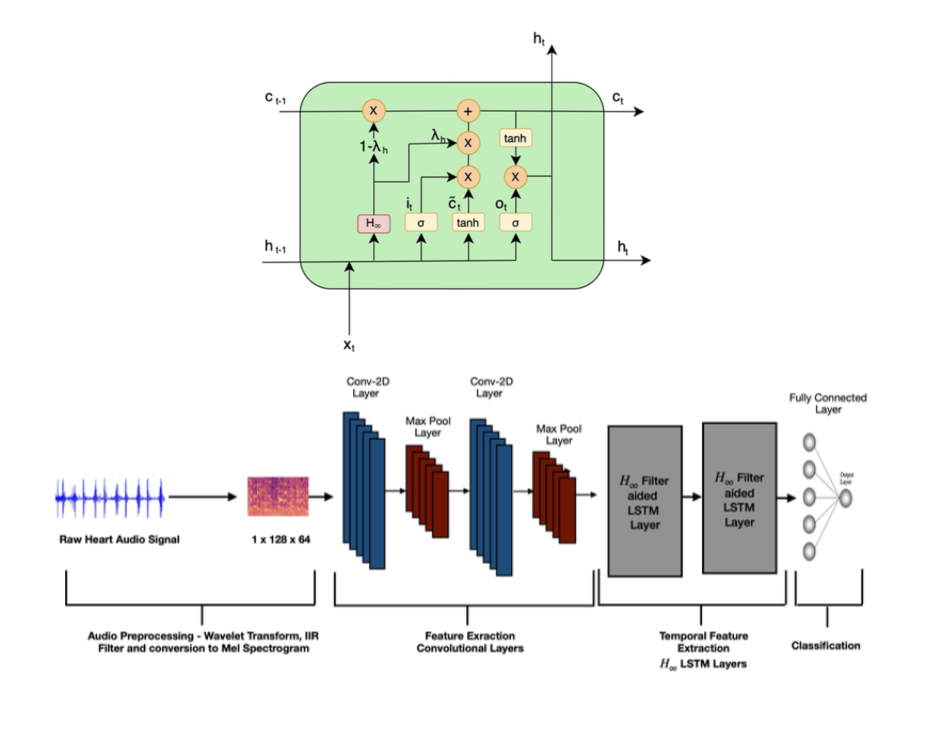
H-Infinity Filter Enhanced CNN-LSTM for Arrhythmia Detection from Heart Sound Recordings Read Code
Formulated a control-theoretic deep learning framework by embedding an H-Infinity filter into the forget-gate of an LSTM cell. Mathematically bounded noise tolerance under worst-case signal error profiles, achieving a 98.85% F1-score on severely degraded phonocardiogram recordings.
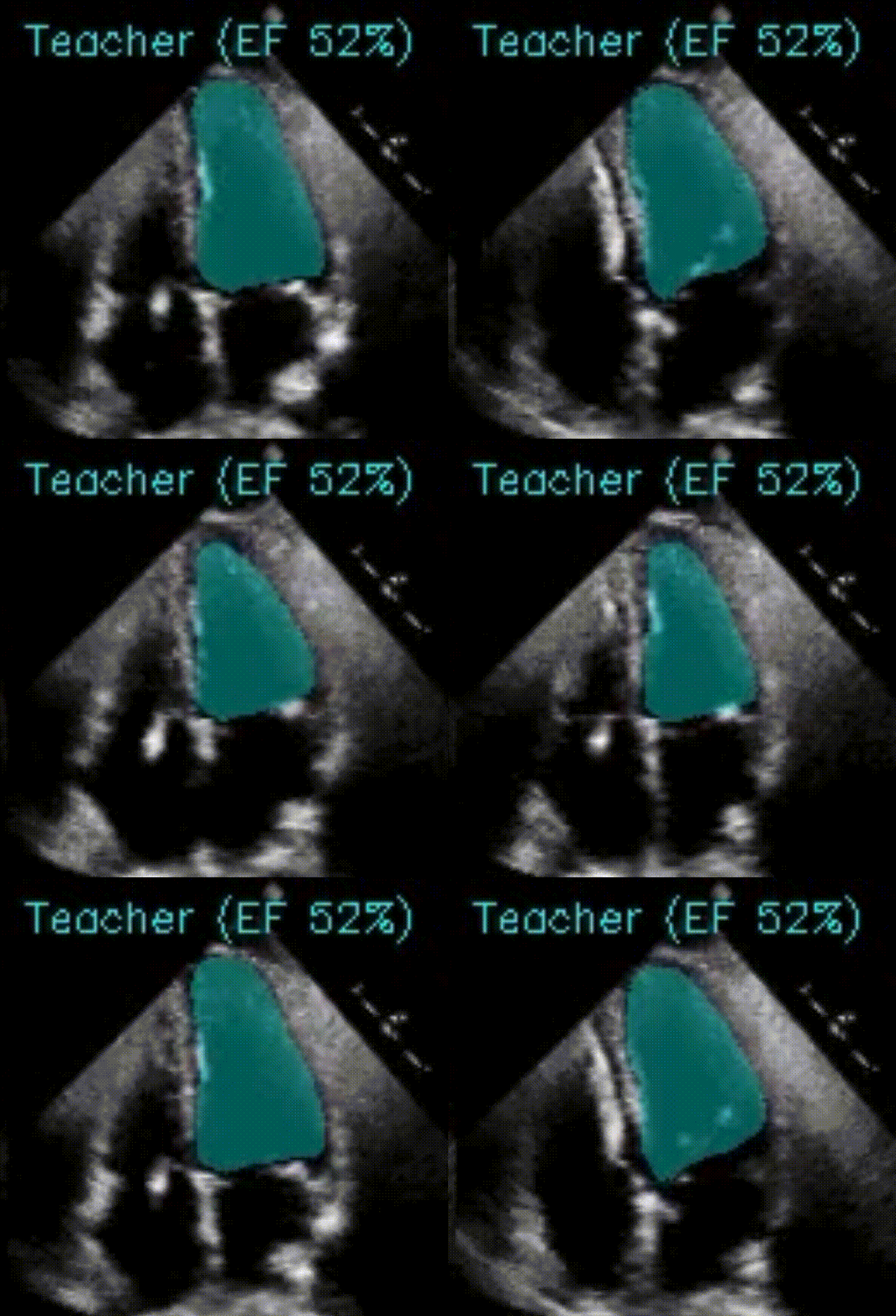
A Deep Learning Framework for Automated and Consistent Ejection Fraction Quantification in Echocardiography Manuscript available upon request
Designed a semi-supervised Mean-Teacher framework featuring Pyramidal Vision Transformers (PViT) for automated Ejection Fraction (EF) estimation from echocardiograms. Combined frame-wise segmentation with single-plane ellipsoid modeling, reducing mean estimation error from 12.0% to 7.8% on echo sequences.
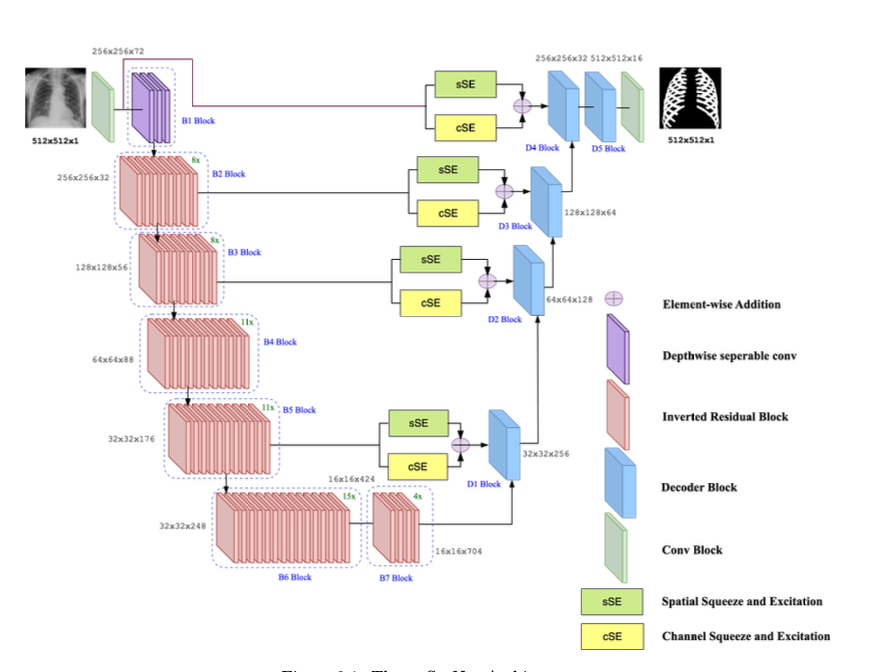
Automated Rib Segmentation in Chest X-rays Using ThoraxSegNet: Enhancing Pulmonary Disease Detection and Analysis Manuscript available upon request
Developed ThoraxSegNet, a specialized deep segmentation model for anatomical rib extraction in radiographs. Isolates bony structures to reduce anatomical occlusion, improving downstream pulmonary disease localization and diagnostic clarity.
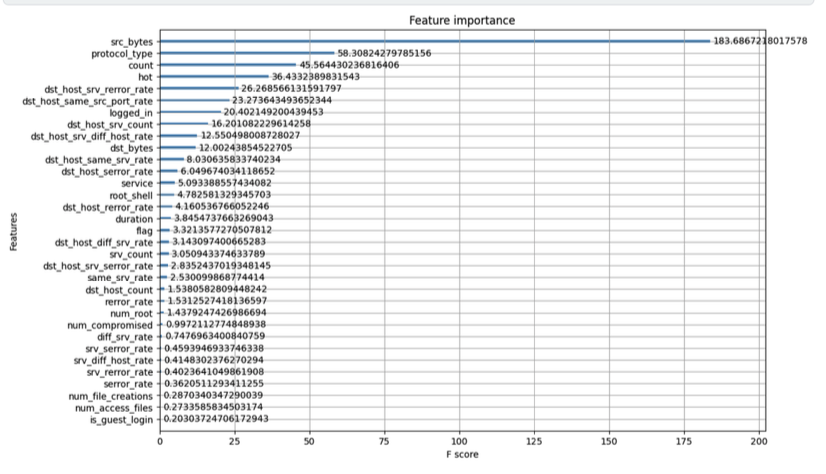
DL-ARP: A Deep Learning based framework for dynamic Detection and Mitigation of ARP Spoofing attacks Read
Proposed a lightweight deep learning architecture for real-time detection and dynamic mitigation of ARP spoofing attacks, securing network data-link layers against malicious ARP table poisoning with minimal routing overhead.
Experience

Architected a privacy-preserving federated learning framework (SecAgg + FedAvg) across ISP nodes for decentralized VPN and ToR traffic identification over 400Gbps streams without violating cross-ISP data regulations. Deployed a fully air-gapped LLM inference stack (vLLM, Qwen3.6-27B-FP8, Qdrant RAG) achieving ~60 tok/s output for internal code analysis.

Collaborated with ICAR to develop and deploy fine-tuned MobileNetV4 and SAM-based segmentation models for leaf and fruit lesion classification from field-captured mobile images. Optimized models using Post-Training Quantization (ONNX INT8), cutting memory inference latency by ~2.5× for low-power mobile edge deployment.

Implemented time-series forecasting ensembles using Facebook Prophet with multiplicative seasonality decomposition for continuous demand estimation (14% MAPE), integrating predictive models into full-stack Flask and ReactJS microservice architectures.